
Work Report of Wanda Group in 2016
Jan 16,2017
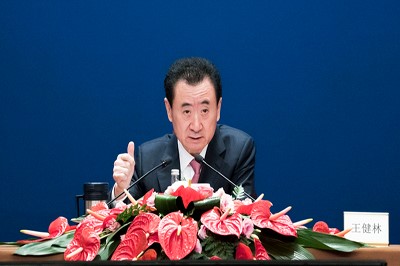
Work Summary of Wanda Group in 2016
January 14, 2017
To begin with, I wish to, on behalf of the Board of Directors of Wanda Group, express a warm welcome to all of you present here at Wanda Group’s 2016 annual meeting at Hefei Wanda City! The year 2016 was a crucial year in Wanda’s transformation and saw the Group make major progress in diverse aspects including expansion in emerging industries, application of high technologies and business internationalization. In a year that also saw the country’s real estate market continue its upward climb, Wanda Group made the bold and surprising move to adjust down RMB 60 billion in real estate revenue to resolutely advance its transformation agenda, something that no other enterprise in China is capable of doing. In 2016, under the leadership of the Board of Directors, and under the concerted efforts of the management headed by Mr. Ding and the entire staff, we excellently accomplished all tasks set for the year. Here I will summarize our work in 2016 from two aspects:
I. OPERATING HIGHLIGHTS IN 2016
(I) All Tasks for the Year Accomplished
In 2016, the Group’s assets reached RMB 796.1 billion, up 21.4% y/y (using the cost method). Its operating revenue reached RMB 254.98 billion, or 103.2% of target, up 3.4%. In terms of revenues from real estate contracts, the Group’s revenue decreased by 13.9% y/y, mainly due to a downside adjustment of RMB 60 billion in real estate sales revenue. Beginning this year, Wanda will only measure operating revenue because transformation is not only about business and strategy but it should also be reflected in accounting. While Wanda’s operating revenue did not increase significantly, and indeed its contract revenue experienced a decrease, its net profit posted an impressive two-digit growth.
Dalian Wanda Commercial Properties achieved RMB 143.02 billion in revenue, or 100.4% of target, maintaining a positive y/y growth in net profit in spite of a 25% y/y decrease in revenue. Increased net profit achieved at a decrease in total revenue by one fourth means a significant improvement in the quality of revenue. Dalian Wanda Commercial Properties achieved RMB 112.27 billion in revenue from real estate, or 100% of target, and RMB 19.58 billion in rent receipts, or 102.3% of target, up 29.6% y/y, with its rent collection rate reaching 99.99%. Why it was not 100% is because one rent receivable in the amount of RMB 160,000 did not arrive until January 2, 2017 and barring the two days in delay, we would have achieved a rent collection rate of 100% for four consecutive years. Of course, while it was a tiny regret, a 99.99% rent collection rate is already satisfactory enough. Dalian Wanda Commercial Properties has set the world record of maintaining a collection rate of more than 99.5% for 11 consecutive
(II) Business Transformation Basically Completed
1. Services contributed more revenue and profit than real estate. In 2016, services contributed 55% of the Group’s total revenue, surpassing the real estate business for the first time, and the net profit (unaudited) from services in the year was also greater than that from the real estate business. Wanda has accomplished its preliminary goal of transformation one year in advance. Therefore, 2016 was a critical year of landmark significance to Wanda. While the real estate revenue of Dalian Wanda Commercial Properties, Wanda Group’s core enterprise undergoing transformation, still exceeds the revenue from its other operations such as property lease, property lease has taken up approximately 55% of its net profit, according to estimates. In other words, non-real estate operations including property lease have surpassed real estate development in profit generation of Dalian Wanda Commercial Properties which, so to speak, is no longer a real estate enterprise. Therefore, I have suggested several times about renaming Dalian Wanda Commercial Properties in late 2017 or 2018 as a commercial investment management service group, no longer positioned as a real estate developer.
2. Wanda has succeeded in its shift to the asset-light strategy. Of the 50 Wanda Plazas opened in 2016, 21 were asset-light projects. In the fourth quarter of 2016, Dalian Wanda Commercial Properties signed contracts with companies including China CITIC Bank, China Minsheng Trust and R&F Properties over approximately 90 Wanda Plazas with a combined value of RMB 105 billion. From 2017 to 2019, Wanda will deliver 30 Wanda Plazas to investors every year and share net rent revenues with them. As Wanda operates a sophisticated IT based management system, the management expenses account only less than 20% of rent, and with tax payments being set aside, all the rest is net rent. We call Wanda Plazas operated in this asset-light model “investment-category Wanda Plazas”, where investors place orders with us and we are responsible for land securement, construction, merchant recruitment and operation. Even more encouragingly, in 2016 we have developed a new asset-light format called “collaboration-category Wanda Plazas”, where investors provide both land and funds and Wanda is responsible for design, construction advice, merchant recruitment and operation, with the investor and Wanda sharing the net rent on a 70/30 basis.
However, we don’t do all projects offered to us but are selective according to our own criteria before commencing the projects going through the entire process from design and construction guidance to merchant recruitment and operation. Be it design, construction supervision or merchant recruitment, all related costs are borne by investors. The collaboration-category Wanda Plaza model is arguably the highest form of Wanda’s asset-light model, where not only the capitalization part is omitted but the issue related to collectively owned land is satisfactorily solved. China’s land is divided by ownership into state-owned land and collectively owned land. State-owned land is tradable in the market with an ownership certificate and collectively owned land neither is tradable nor have an ownership certificate. However, because of the country’s rapid urbanization, a lot of collectively owned land which was in rural areas three decades ago is now part of Beijing’s urban area. In Shenzhen, there are still many villages with their land being collectively owned. Municipal governments usually allocate a plot of land acquired from farmer relocation for development of industries, which is mostly used for commercial projects. Under Wanda’s previous asset-heavy property development model, we steered clear of such projects using collectively owned land because they do not have ownership certificates and cannot be included in the balance sheet. But on the other hand, some collectively owned land parcels are favourably located. For example, we developed a Wanda Plaza within the Second-Ring Road of Beijing on a parcel of land that has been idle for more than ten years because of failure of the villagers to reach an agreement as how should it be developed. The Wanda Plaza project, however, was approved with more than 90% of the villagers giving the nod. This collaborative model which offers multi-fold benefits such as sharing rent, omitting capitalization an